
 Bitcoin
  Ethereum
  Tether
  BNB
BNB  XRP
XRP  USDC
USDC  Solana
  TRON
TRON  Lido Staked Ether
  Figure Heloc
According to the agencies’ operations plans, staff are expected to return to work the day after the “enactment of appropriations legislation,” which occurred late on Wednesday. 🔗 Source 💡 DMK Insight The recent enactment of appropriations legislation is a pivotal moment for market participants, particularly those in the forex and crypto spaces. With agencies set to resume operations, traders should anticipate a potential influx of market-moving news and data releases that could impact liquidity and volatility. This could lead to significant price movements, especially in pairs sensitive to U.S. economic indicators. Look for immediate reactions in the forex market, particularly in USD pairs, as government operations resume and economic reports begin to flow again. Traders should keep an eye on key economic indicators scheduled for release in the coming days, as these could provide insight into the health of the economy and influence trading strategies. Additionally, the crypto market may react to any regulatory updates or fiscal policies stemming from this legislation, which could create opportunities for both short and long positions. However, it’s worth noting that while a return to normalcy is positive, any unexpected delays or complications could lead to increased volatility. Watch for price levels around recent highs and lows to gauge market sentiment and potential breakout points. 📮 Takeaway Monitor USD pairs closely as economic data resumes; look for volatility around key indicators in the coming days.

US regulator mulls guidance for tokenized deposit insurance, stablecoins
Acting FDIC Chair Travis Hill said the agency is also working on a regime for stablecoin issuance and expects to issue a proposal for an application process by the end of year. 🔗 Source 💡 DMK Insight The FDIC’s move towards a stablecoin issuance framework could reshape the crypto landscape. With the agency planning to propose an application process by year-end, traders should be on alert for how this regulatory clarity might influence market sentiment. A structured regime could legitimize stablecoins, potentially increasing institutional adoption and liquidity. This is particularly relevant as we see volatility in crypto markets; a clear regulatory path might stabilize prices and encourage more traditional investors to enter the space. However, there’s a flip side—if the regulations are too stringent, it could stifle innovation and lead to a flight of projects to more favorable jurisdictions. Keep an eye on the broader implications for related assets, especially those tied to stablecoins like USDC or DAI, as their performance could be directly impacted by these developments. Watch for any announcements in the coming weeks that might signal the direction of this regulatory framework, as they could create significant trading opportunities or risks in the short term. 📮 Takeaway Traders should monitor the FDIC’s stablecoin proposal closely, as it could impact market sentiment and liquidity—watch for updates by year-end.

Aave to offer zero-fee stablecoin ramps in Europe after MiCA approval
Aave said compliant, audited payment pathways are crucial for onboarding new users to decentralized finance. 🔗 Source 💡 DMK Insight Aave’s focus on compliant payment pathways is a game-changer for DeFi adoption. By emphasizing audited and compliant systems, Aave is addressing one of the biggest hurdles for new users: trust. Many potential investors are still wary of the perceived risks in DeFi, and this move could significantly lower the barrier to entry. As regulatory scrutiny increases, platforms that prioritize compliance may gain a competitive edge, attracting more institutional and retail investors alike. This could lead to a surge in liquidity and trading volume across DeFi platforms, impacting related assets like Ethereum, which often serves as the backbone for many DeFi applications. However, there’s a flip side. If Aave’s compliance measures become too stringent, it could alienate the more risk-tolerant segment of the crypto community that thrives on decentralization. Traders should monitor how this strategy unfolds, particularly in the context of upcoming regulatory announcements. Key metrics to watch include user growth rates and transaction volumes, ideally on a weekly basis, to gauge the effectiveness of these new pathways. 📮 Takeaway Watch for Aave’s user growth and transaction volumes weekly; compliance could reshape DeFi’s landscape and attract new capital.

Bitcoin ETFs bleed $866M in second-worst day on record, but some analysts still bullish
Bitcoin ETFs saw $866 million in outflows as the US shutdown ended, pushing BTC to a six-month low and raising concerns over market structure and investor demand. 🔗 Source 💡 DMK Insight Bitcoin’s recent drop to $96,704 is a wake-up call for traders: ETF outflows signal waning confidence. The $866 million outflow from Bitcoin ETFs coinciding with the end of the US shutdown raises serious questions about market sentiment and demand. This kind of movement typically indicates that institutional investors are pulling back, which could lead to further price declines. For day traders and swing traders, this is a critical moment to reassess positions, especially if BTC continues to hover around this six-month low. Watch for support levels around $95,000; a break below could trigger more selling pressure. On the flip side, if BTC manages to hold above this level, it might attract bargain hunters looking for a rebound. Keep an eye on trading volumes—if they spike during a recovery, it could signal renewed interest. The next few days will be crucial; monitor the market closely for any shifts in sentiment or institutional buying that could change the current narrative. 📮 Takeaway Watch for Bitcoin to hold above $95,000; a break below could lead to increased selling pressure and further declines.

China Oct Retail Sale (YoY) 2.9% (exp 2.7%) & Industrial Production (YoY) 4.9% (exp 5.5%)
Retail Sales (YoY) +2.9%, a beatexpected +2.7%, prior +3.0%Industrial Production (YoY) +4.9%, a decent sized missexpected +5.5%, prior +6.5%Industrial Production YTD (YoY)+6.1% (prior +6.2%)Fixed Asset Investment (YTD) (YoY) -1.7%, worse than expected expected -0.8%, prior -0.5%Unemployment Rate 5.1%, down from September expected 5.2%, prior 5.2%Property investment continues to plummet, -14.7% YTD y/y prior -13.9%Jan–Oct new construction starts -19.8% y/y Jan–Oct property sales by floor area -6.8% y/y Jan–Oct funds raised by Chinese real estate developers -9.7% y/yChina’s National Bureau of Statistics (NBS): October’s economic operations generally stable, with improving new growth drivers Pressure to adjust domestic economic structure remains big, stabilisation faces some challenges This article was written by Eamonn Sheridan at investinglive.com. 🔗 Source 💡 DMK Insight Retail sales beat expectations, but industrial production misses, and here’s why that matters: The latest economic data shows retail sales growing at 2.9% year-over-year, slightly above the expected 2.7%. This suggests consumer spending remains resilient, which could support equities in the short term. However, the industrial production figure of 4.9% falls short of the anticipated 5.5%, indicating potential weakness in manufacturing and broader economic activity. The decline in fixed asset investment at -1.7% further underscores concerns about business confidence and future growth prospects. With the unemployment rate dropping to 5.1%, it’s clear the labor market is holding up, but the plummeting property investment at -14.7% raises red flags. Traders should watch for how these mixed signals affect market sentiment, especially in sectors tied to consumer discretionary and industrials. Key levels to monitor include the S&P 500’s support around 4,200, which could be tested if industrial data continues to disappoint. Keep an eye on upcoming Fed announcements, as they could react to these economic indicators, influencing interest rates and market volatility. 📮 Takeaway Watch the S&P 500 around 4,200 for support; mixed economic signals could lead to increased volatility in the coming weeks.
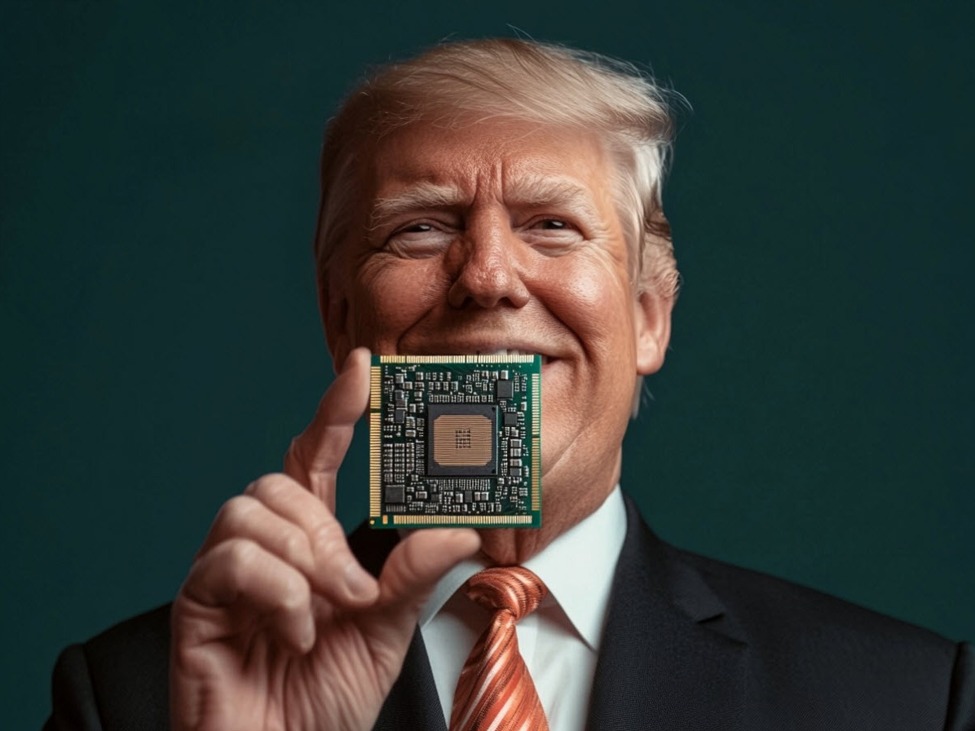
Amazon, Microsoft back bill curbing Nvidia’s China chip exports to secure U.S. AI supply
Amazon and Microsoft have thrown their support behind the proposed Gain AI Act, a U.S. bill that would restrict Nvidia and other chipmakers from exporting advanced semiconductors to China and other embargoed markets until domestic demand is fully met. The move marks an unusual policy rift between Nvidia and two of its biggest customers, highlighting intensifying competition for AI chips inside the United States.The legislation aims to safeguard U.S. supply for cloud providers and data-centre operators racing to build AI infrastructure. It has gained backing from Amazon, Microsoft and AI developer Anthropic, who favour a clause granting “trusted entities” export exemptions without requiring government licences, a provision that would ease their global operations and potentially give them a competitive advantage.Nvidia, which controls about 80% of the AI chip market, has mounted a heavy lobbying effort against the bill, spending US$3.5 million this year. The company argues the act risks distorting global semiconductor markets and could trigger even tighter export restrictions from Washington.The Gain AI Act has support from key Democrats including Senate Majority Leader Chuck Schumer and could be folded into the National Defense Authorization Act before year-end. But it still needs approval from Senate and House Republicans, and faces scepticism from some White House officials. Supporters maintain the bill is essential to preventing future chip shortages and reinforcing U.S. leadership in AI. This article was written by Eamonn Sheridan at investinglive.com. 🔗 Source 💡 DMK Insight Amazon and Microsoft’s backing of the Gain AI Act is a game changer for chipmakers like Nvidia. This legislation could significantly impact Nvidia’s supply chain and pricing power, especially if they can’t meet domestic demand before exporting. For traders, this means keeping an eye on Nvidia’s stock performance and any potential supply chain disruptions. If Nvidia’s share price starts to falter, it could create ripple effects across the tech sector, particularly for companies reliant on their chips. The broader implications could also affect related markets, like semiconductor ETFs or tech indices. Watch for Nvidia’s response to this bill and any shifts in their production strategy—key levels to monitor would be their recent support and resistance points. If the stock breaks below a critical level, it could signal a bearish trend. Here’s the thing: while this may seem like a win for domestic production, it could also lead to increased prices and supply shortages, which might not sit well with consumers and businesses alike. Keep an eye on the legislative timeline and any amendments that could alter the bill’s impact. 📮 Takeaway Traders should monitor Nvidia’s stock closely for any price drops below key support levels as the Gain AI Act progresses.

China say stabilisation taking hold despite weak investment and industrial slowdown in Oct
China’s October activity data painted a mixed picture, with retail sales modestly beating expectations while industrial output and -investment weakened, underscoring the economy’s uneven momentum as policymakers continue pushing stimulus through the end of the year.Retail sales rose 2.9% year-on-year, supported in part by spending over the National Day and Mid-Autumn Festival holidays. But industrial production grew just 4.9%, a sizeable miss versus forecasts and well below September’s pace. Fixed asset investment deteriorated further, falling 1.7% year-to-date, dragged down by collapsing property-sector activity. Real estate investment dropped 14.7% in the first ten months, while new starts and developer funding posted deep double-digit declines.The unemployment rate improved slightly to 5.1%.Commenting on the data, a spokesperson for the National Bureau of Statistics (NBS) said holiday-driven consumption boosted services activity but acknowledged slowing investment due to a “grim external environment” and intensifying domestic competition. Firms are increasingly cautious in their investment decisions, the spokesperson said, though the overall structure of investment is “improving,” with manufacturing in emerging sectors still expanding.The NBS argued China retains “huge” investment potential and pledged to “further spur private investment vitality.” On trade, the spokesperson described China as resilient despite rising global protectionism, saying the authorities would stabilise exports and support firms under pressure.The bureau said short-term pain is inevitable as new growth drivers replace old ones, but insisted the stabilising domestic backdrop — including an improvement in supply-demand dynamics and rising prices for services and industrial products — helped push CPI back into positive territory. The NBS concluded that stabilisation efforts are laying a “firm foundation” for achieving full-year growth targets.—The NBS messaging leans heavily on stabilisation and resilience, but the sharp investment and property-sector declines reaffirm China’s uneven recovery and continued reliance on targeted policy support. This article was written by Eamonn Sheridan at investinglive.com. 🔗 Source 💡 DMK Insight China’s mixed economic data is a double-edged sword for traders: retail sales up, but industrial output faltering. The 2.9% rise in retail sales might seem like a win, especially with the National Day spending boost, but the weakness in industrial output and investment signals underlying economic fragility. This uneven momentum could lead to volatility in related markets, particularly commodities and currencies linked to Chinese demand. Traders should watch for how these indicators affect the yuan and commodities like copper and oil, which often react to shifts in Chinese economic health. If industrial output continues to decline, it could pressure commodity prices and lead to a risk-off sentiment in global markets. Here’s the kicker: while some might see the retail sales uptick as a reason to be bullish, the broader economic context suggests caution. If the stimulus measures fail to translate into sustained growth, we could see a pullback in risk assets. Keep an eye on key levels in the yuan and commodity prices, especially if we approach significant support or resistance zones in the coming weeks. 📮 Takeaway Watch for how China’s industrial output impacts commodity prices and the yuan; key levels to monitor could signal broader market shifts.
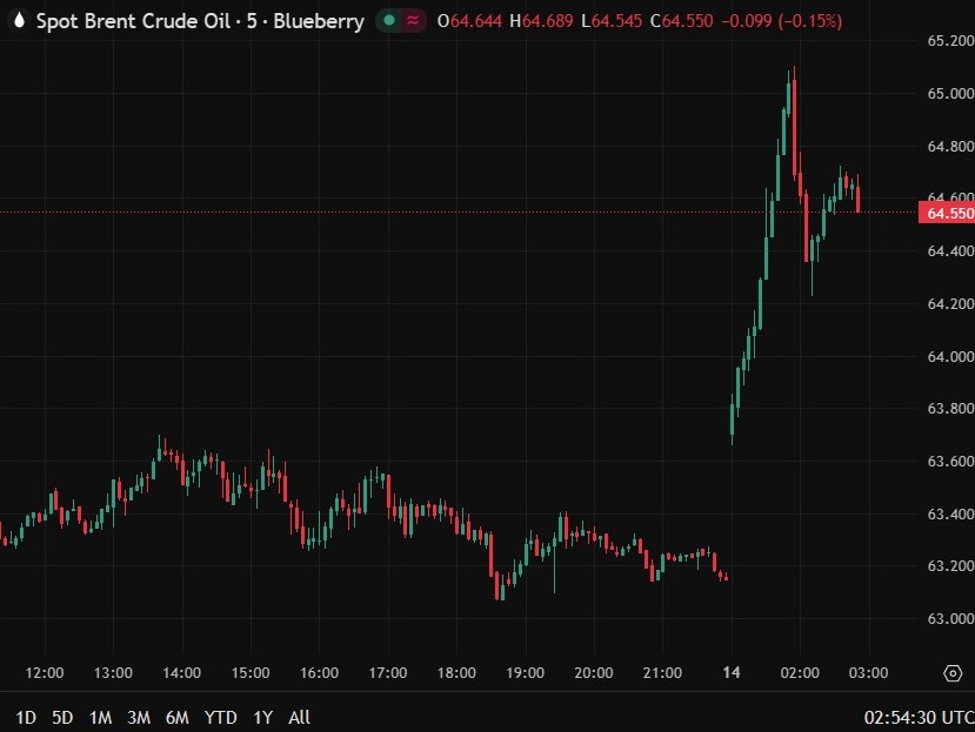
Oil surges after drone strike hits Russian Novorossiysk terminal, heightening supply risks
Oil prices climbed more than 2% in early Friday trade after a Ukrainian drone strike damaged an oil depot in the Russian Black Sea port of Novorossiysk, one of Moscow’s key export hubs. Brent rose 2.1%, while WTI gained 2.4%.Local authorities in Russia’s Krasnodar region said drone debris struck three residential apartments, a trans-shipment oil depot and nearby coastal facilities. Novorossiysk is a major outlet for Russian crude and condensate exports, handling roughly 2.2 million barrels per day.Prices had stabilised on Thursday as traders weighed the impact of sweeping U.S. sanctions on Russian oil giants Lukoil and Rosneft, which take effect on November 21 and bar transactions with the companies. JPMorgan said nearly 1.4 million barrels per day of Russian crude — almost a third of its seaborne flows — is now sitting on tankers as discharge slows under sanction pressure. The bank warned that unloading cargoes after the cut-off date could become “significantly more challenging.”While the damage appears limited to the Sheskharis transshipment terminal, the incident serves as a reminder of the dual risks facing Russian exports: Ukrainian drone attacks and tightening Western sanctions. This article was written by Eamonn Sheridan at investinglive.com. 🔗 Source 💡 DMK Insight Oil prices are reacting sharply to geopolitical tensions, and here’s why that matters: The recent drone strike on an oil depot in Novorossiysk has escalated concerns over supply disruptions in a critical export region for Russia. With Brent rising 2.1% and WTI up 2.4%, traders should be aware that this spike isn’t just a blip; it reflects underlying fears of further conflict impacting oil supply chains. Historically, such geopolitical events can lead to sustained price increases, especially if they trigger broader sanctions or military responses. Keep an eye on the $90 level for Brent and $85 for WTI, as these could act as psychological barriers or support levels in the coming days. But here’s the flip side: if the situation stabilizes quickly, we might see a retracement. Traders should monitor the news closely for any signs of de-escalation. Additionally, watch for inventory reports next week, as they could provide insight into how these price movements are affecting supply dynamics. The volatility in oil prices could also ripple through related markets, like energy stocks and ETFs, so stay alert for correlated movements there. 📮 Takeaway Watch for Brent to hold above $90 and WTI above $85; any stabilization in the conflict could trigger a price pullback.

U.S. approves potential US$330m fighter-jet parts sale to Taiwan
The U.S. State Department has approved a possible US$330 million sale of fighter-jet spare parts and repair components to Taiwan’s de facto embassy, the Taipei Economic and Cultural Representative Office (TECRO). The Pentagon said the package would support the maintenance and sustainment of Taiwan’s existing aircraft fleet, enhancing the island’s readiness amid rising regional security tensions. The approval does not guarantee a contract will be signed but marks the latest in a steady series of U.S. support measures for Taiwan’s defence capabilities. —The approval underscores continued U.S.–Taiwan defence cooperation and may heighten geopolitical sensitivity in cross-Strait relations. Let’s see if it leaks into China-US economic relations …. This article was written by Eamonn Sheridan at investinglive.com. 🔗 Source 💡 DMK Insight Taiwan’s recent arms deal could stir geopolitical tensions, impacting markets significantly. The U.S. State Department’s approval of a $330 million sale of fighter-jet spare parts to Taiwan signals a strengthening of military ties, which might provoke reactions from China. Traders should keep an eye on defense stocks and related sectors, as increased military spending often leads to bullish trends in these areas. Additionally, geopolitical tensions can lead to volatility in broader markets, particularly in Asia-Pacific currencies and commodities. If tensions escalate, we could see a flight to safety, impacting gold and the U.S. dollar. On the flip side, this deal could also be interpreted as a stabilizing factor for Taiwan, potentially attracting foreign investments. Traders should monitor how this situation unfolds over the coming weeks, especially as the geopolitical landscape shifts. Key levels to watch include defense sector stocks and any significant moves in the Taiwan dollar against the U.S. dollar, which could indicate market sentiment towards this deal. 📮 Takeaway Watch for volatility in defense stocks and the Taiwan dollar as geopolitical tensions rise from the U.S.-Taiwan arms deal.
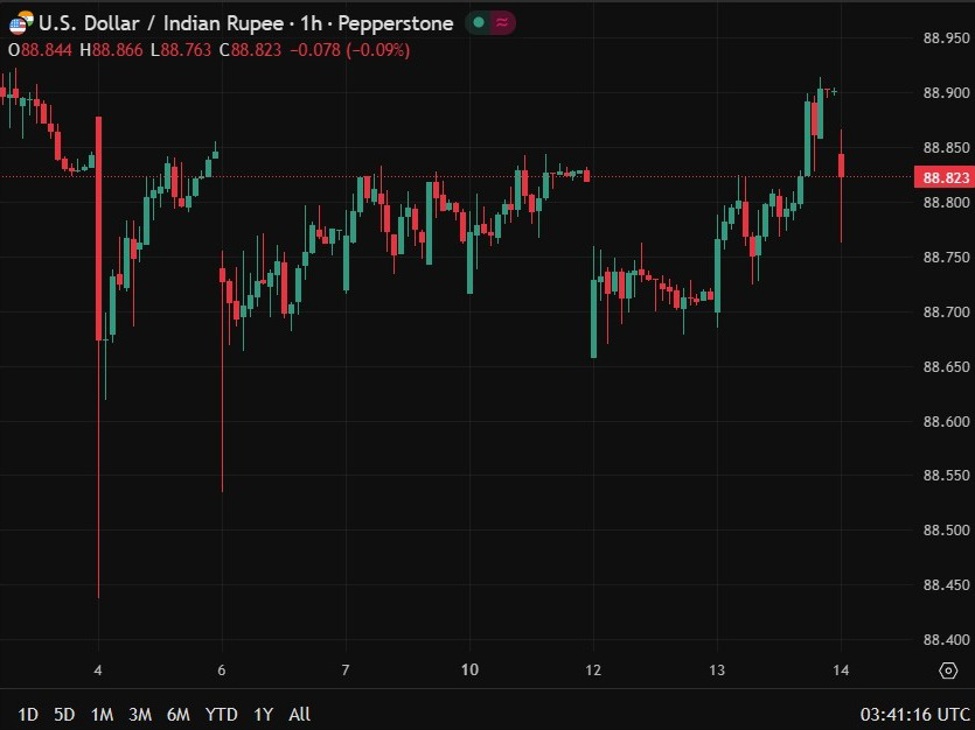
FX intervention – Indian central bank likely selling U.S. dollars to support rupee
Indian central bank likely selling U.S. dollars to anchor rupee above record low Indian rupee INR hit an all-time low at 88.80 This article was written by Eamonn Sheridan at investinglive.com. 🔗 Source 💡 DMK Insight The Indian rupee’s drop to 88.80 is a critical moment for traders: here’s why. The Reserve Bank of India (RBI) is likely intervening in the forex market by selling U.S. dollars to stabilize the rupee. This kind of action can create short-term volatility, especially if traders perceive the RBI’s efforts as a sign of weakness in the currency. If the rupee continues to slide, it could trigger further interventions, leading to a cycle of volatility. Traders should keep an eye on the RBI’s reserves and any statements from officials, as these can provide clues about future actions. Additionally, watch for correlated movements in the USD/INR pair, as a sustained decline could push it beyond key resistance levels. On the flip side, if the rupee manages to hold above 88.80, it could signal a temporary stabilization, allowing for potential short-term buying opportunities. However, the broader economic context, including inflation and trade balances, will ultimately dictate the rupee’s trajectory. Keep an eye on upcoming economic data releases that could impact sentiment and market positioning. 📮 Takeaway Watch the USD/INR pair closely; a sustained move above 88.80 could indicate further RBI intervention and increased volatility.