
 Bitcoin
  Ethereum
  Tether
  BNB
BNB  XRP
XRP  USDC
USDC  Solana
  TRON
TRON  Lido Staked Ether
  Figure Heloc
The majority needed for the upper house is 124 votes. The lower house is often considered the more important one though. In any case, Takaichi has to win a majority in both houses. We should get the results for the lower house any time now. This article was written by Justin Low at investinglive.com. 🔗 Read Full Article 💡 DMK Insight The current political dynamics in Japan are crucial for traders, especially as they pertain to fiscal policy and potential economic reforms. If Takaichi secures a majority in both houses, we could see a shift towards more aggressive economic stimulus measures, which might lead to a weaker yen. This is significant for forex traders, as a depreciating yen could create opportunities in USD/JPY pairs. Keep an eye on the lower house results; a decisive win could trigger immediate market reactions, particularly in equities and commodities linked to Japanese exports. Moreover, the broader market context shows that Japan’s economic recovery has been sluggish, and any new policies could either bolster or hinder growth prospects. Traders should monitor the Nikkei 225 index for technical levels, especially if it approaches key resistance around 30,000. A breakout could signal bullish momentum, while failure to hold above this level might lead to a pullback. The real story here is how institutional players react to these political outcomes. If they perceive instability or uncertainty, we might see increased volatility across Japanese assets. Watch for volume spikes in the forex market as traders adjust their positions based on the election results and subsequent policy announcements. 📮 Takeaway Traders should closely monitor the lower house election results, as a Takaichi majority could lead to significant yen depreciation and impact related forex and equity markets.

Sanae Takaichi wins Japan lower house vote, set to become first female prime minister
The upper house vote is still being cast but with her win in the lower house, the path is clear for Takaichi to become Japan’s first female prime minister. No second round of voting is needed and that’s a relief for Takaichi but it is now that the real challenge will begin for her.The first obstacle of having to navigate through the past few weeks was a tricky one but she has managed to see that through. As a reminder, she’s a fiscal dove and often dubbed as Shinzo Abe’s protégé in preaching the “Abenomics” approach to the economy. USD/JPY is trading up 0.3% on the day now to 151.17 currently. This article was written by Justin Low at investinglive.com. 🔗 Read Full Article 💡 DMK Insight Takaichi’s potential rise as Japan’s first female prime minister could signal a shift in the country’s economic policies, particularly regarding monetary easing and fiscal stimulus. This is crucial for traders to consider, as Japan’s economic landscape has been heavily influenced by the Bank of Japan’s (BoJ) ultra-loose monetary policy. If Takaichi pushes for more aggressive fiscal measures, it could lead to a weakening yen, impacting forex pairs like USD/JPY and potentially boosting commodities priced in dollars. Moreover, keep an eye on the Nikkei 225 index, which may react positively to any pro-growth initiatives she proposes. Historically, political changes in Japan have led to increased volatility in both equity and currency markets, so traders should be prepared for potential price swings. Watch for key resistance levels around 30,000 on the Nikkei and support at 145 for USD/JPY. The real question is whether institutional investors will back her policies or remain skeptical, which could influence market sentiment significantly. As Takaichi’s agenda unfolds, monitoring economic indicators like GDP growth and inflation rates will be essential for gauging the broader impact on the markets. 📮 Takeaway Traders should watch for shifts in Japan’s economic policy under Takaichi, particularly regarding the yen’s strength and potential impacts on the Nikkei 225 and USD/JPY pairs.

Bitcoin technical analysis today: trend line bounce fades, IV rises, and a clean trade map
Bitcoin Futures Technical Analysis on the daily chartMany times, I like to look at a few charts and include a very simple one like the following:Oh, and it does not mean that I am buying on the next possible touch point of the price on that trend line. I like to watch, first. Often I look how this sort of charts may fake others out.But before I dive into today and going forward, what did we have yesterday? Yesterday’s pop was real; today’s giveback is telling. On our daily futures chart, price bounced off the rising red trendline on Friday 17 October, then rallied about 4.12 percent yesterday, and is down more than 2 percent so far today. The bounce pierced the pitchfork you see on the chart and even nicked the August lows near 108,400, which keeps the discussion honest. My base case is that the market will want to retest that red line at some point; a later liquidity sweep near the round 100,000 level would not surprise, especially with 99,500 sitting almost on the June low that many will defend.One simple perspective that many algos and discretionary traders will track is the rising trend line marked in red. Price tagged it cleanly and bounced on Friday 17 October 2025, two trading sessions ago on the futures chart. After that retracement up, it is reasonable to expect a return to test that line. If sellers press, market makers may attempt a liquidity run around the 100,000 round number, which sits below the trend line and would sweep resting stops. Keep the 99,500 junction on the radar as well, since it sits close to the June low and often attracts reactive flow.Remember that technical analysis is not about a single chart or a single idea. The craft is to know what others are watching, even when those levels are later used to fake them out and stop them out. The red trend line, the psychological 100,000, and the 99,500 pocket are three reference points likely to shape behavior in the next legs.For broader context, performance is mixed, one week minus 6.33 percent, one month minus 7.36 percent, three months minus 9.99 percent, yet six months still plus 15.40 percent, year to date plus 14.32 percent, and one year plus 57.17 percent. If you want the backdrop on the recent slide, see our coverage on investingLive, Bitcoin slumps to fresh four month lows, technical trouble continues to brew, and our follow up Bitcoin trade idea as bears regain control, join the short.Options color, IBIT readAcross the iShares Bitcoin Trust options, implied volatility is 44.4 with a one year percentile of 49, so roughly mid range but rising. IV is 9.7 percent above its 20 day IV average of 40.4, and 13.6 percent above the 20 day historical volatility at 39.1. Translation; options markets are pricing more movement than we have realized lately, though not at panic levels. That favors owning a little time and being selective when selling front week premium.Strategy notes for options usersRange or two sided view, calendars and diagonals work well when front maturities carry lower IV than back months.Directional but risk controlled, prefer debit spreads to naked calls or puts at these IV marks.Hedgers with spot or micro futures, a simple collar on IBIT can smooth the path while preserving participation.Positioning pulse for crypto nowFresh flow is cooling a touch; the latest twenty four hour long volume is down 15.40 percent to about 54.15B, and twenty four hour short volume is down 10.74 percent to about 58.41B. Shorts still outsize longs, which fits a cautious tone, yet both sides reduced activity, which often precedes a test of nearby levels before the next committed leg.Traders at Ethereum can also look at lower key levels as Ethereum futures also activated bearish threshold, according to tradeCompass.The tradeCompass map for bitcoin traders todayThink of this as a map, not a prediction. Act where price accepts, not where it merely wicks.Bearish premise while below 109,250 That level sits near the September twenty fifth value area low, a key line from the volume profile view. As long as futures remain under it, I treat the setup as bearish with waypoints to manage risk and expectations.107,750, near the October sixteenth value area low107,250106,700106,325, the October seventeenth VWAP105,300If price slices through and holds below those junctions, the red trendline retest comes into view; a later liquidity run around 100,000, with 99,500 just above the June pivot, is a realistic scenario.Bullish alternative on sustained strength above 110,000 If buyers take control and hold over 110,000, the path opens toward 111,500, then 112,450, then 113,000. Acceptance matters; a quick spike is not enough.Compass reminder for new readers: Treat the thresholds as activation lines. If price lingers under the bearish line, short setups have the advantage. If it powers and holds above the bullish line, longs have the advantage. After the second profit target is reached, move the stop to entry to protect gains and manage the runner.Why this matters for crypto today and this weekRisk assets had a strong Monday, the Nasdaq added about 1.28 percent, yet Bitcoin outperformed on the day and is now underperforming on the pullback. That mix often signals urgency from active sellers in crypto for the session, which reinforces the value of trading the levels rather than the emotion of a single candle.What bitcoin traders and investors should knowThe bounce is not invalidated, yet the failure to build above 109,250 keeps bears in charge until proven otherwise.Options are pricing a bit more future movement than recent realized swings; structure matters.Round numbers attract flows; watch the behavior near 110,000 on the upside and the 100,000 to 99,500 pocket on the downside.If you want to follow some trade ideas (and not only on crypto), you are welcome to join our investingLive.com Telegram channel at https://t.me/investingLiveStocksDisclaimer: This analysis is for informational purposes only and is not financial advice. Trading and investing in financial markets involve risk, and you should conduct your own due

Japanese yen falls as Takaichi wins key vote to become next prime minister
Japan’s lower house has elected Sanae Takaichi to become the next prime minister, with her set to lead the ruling coalition between the LDP and Nippon Ishin. As a reminder, Takaichi is a fiscal dove and a big preacher of “Abenomics”. And that doesn’t bode well for the BOJ’s prospects to push for rate hikes.When she won the LDP leadership election at the start of the month, the yen also fell in reaction to the result. And after some political uncertainty in recent weeks, we’re starting to turn back to that again. The currency is down today but the reaction is relatively modest, with USD/JPY up just 0.4% to 151.40 currently:The near-term chart shows that buyers have broken back above the 100-hour moving average (red line) but price action still keeps below the 200-hour moving average (blue line) of 151.53 currently. As such, the near-term bias is holding more neutral for the time being at least.Now, much of the concerns surrounding Takaichi’s motives were already factored into the gap higher in USD/JPY on 6 October. So, don’t expect too big of a reaction to the latest headlines today.If anything, it just removes the likelihood of the BOJ being able to push for a rate hike by year-end. Then again with some dissents being likely, traders will have to consider the propensity for any surprises. However, I wouldn’t expect the Japanese central bank to run against the premiership and government at this stage.For now, the 200-hour moving average at 151.53 is helping to limit gains for the pair. A break of that will draw back in the potential to revisit the monthly highs at 153.27. This article was written by Justin Low at investinglive.com. 🔗 Read Full Article 💡 DMK Insight Sanae Takaichi’s ascension as Japan’s prime minister could signal a shift in fiscal policy that might impact the Bank of Japan’s (BOJ) stance on monetary easing. Traders should be wary of how her dovish approach aligns with Abenomics, which has historically favored aggressive stimulus measures. This could lead to increased yen volatility, particularly if the market perceives a lack of commitment to tapering bond purchases or adjusting interest rates. In the broader context, this development comes at a time when the global economy is grappling with inflationary pressures and central banks are tightening policies. If Takaichi pushes for continued fiscal expansion, it could weaken the yen further, potentially testing key support levels around 145-150 against the dollar. Traders should monitor the USD/JPY pair closely, as a breach of these levels could trigger a wave of selling. Additionally, keep an eye on Japanese equities, particularly those tied to export-driven sectors, as a weaker yen might initially boost their competitiveness abroad. However, if inflation continues to rise without corresponding wage growth, the long-term outlook for these stocks could sour. Watch for BOJ comments in the coming weeks, as any hints of policy shifts will be crucial for positioning in both forex and equity markets. 📮 Takeaway Traders should closely monitor USD/JPY for potential volatility, especially if Takaichi’s policies lead to a weaker yen and test key support levels.

FX option expiries for 21 October 10am New York cut
There is arguably just one to take note of on the day, as highlighted in bold below.That being for EUR/USD at the 1.1600 level. It isn’t one that ties to any technical significance, so the impact of the expiries might be a bit more muted. The pair is now tussling with key near-term levels, with the downside leaning on the 200-hour moving average of 1.1625. A drop below that will see the near-term bias turn more bearish, so that’s a key level to watch in the session ahead. If so, then only the expiries might factor in to act as a secondary floor to any downside price extensions before we get to US trading.For more information on how to use this data, you may refer to this post here.Head on over to investingLive (formerly ForexLive) to get in on the know! This article was written by Justin Low at investinglive.com. 🔗 Read Full Article

Switzerland September trade balance CHF 4.07 billion vs CHF 4.10 billion prior
Prior CHF 4.10 billion; revised to CHF 3.88 billionThe Swiss trade surplus expanded slightly after the revision to August, with exports seen higher at 23.972 billion (vs 18.907 billion prior) and imports up to 19.899 billion (vs 15.030 billion prior). In real terms, exports were only up 2.7% on the month while imports were up 1.9% on the month. This article was written by Justin Low at investinglive.com. 🔗 Read Full Article 💡 DMK Insight The slight expansion in Switzerland’s trade surplus, with exports rising significantly, could signal a potential strengthening of the CHF against other currencies. This uptick in exports, despite a modest real growth of 2.7%, suggests that Swiss goods are gaining traction in international markets, which is crucial for a country heavily reliant on exports. Traders should keep an eye on the EUR/CHF pair, especially if the CHF starts to show bullish momentum. However, the increase in imports also raises questions about domestic demand and inflationary pressures. If the Swiss economy is importing more, it could indicate higher consumer spending, but it also risks widening the trade balance in the future. This duality could lead to volatility in the CHF as traders weigh the implications of stronger exports against rising import costs. Watch for key technical levels around 0.95 for EUR/CHF; a break below could indicate a stronger CHF. Additionally, monitor the upcoming Swiss economic indicators, as they might provide further clarity on whether this trend is sustainable or just a temporary blip. The real story here is how these figures might influence the Swiss National Bank’s monetary policy in the coming months, especially if inflation remains a concern. 📮 Takeaway Traders should watch the EUR/CHF pair closely for potential bullish signals as Swiss exports rise, while keeping an eye on domestic demand trends and inflation risks.

Japan's Nippon Ishin co-head Fujita says this is a genuine conservative reform government
As many of her predecessors have found out, it’s one thing to win the leadership vote and a whole other to stay in office. Takaichi’s own LDP party is divided into many factions and all want to push their respective agendas at the end of the day. She’s pretty much in the hot seat now and one key reason that helped her rise is her alignment being more towards the right wing.In part, the LDP is also banking on her appeal in that sense to win back some of the conservative base – which have switched to the more right-wing Sanseito party after the recent upper house election results in July. Of course, the Nippon Ishin base is one that also aligns with the right wing but they still have key differences in viewpoints on some matters with the LDP as a whole. This article was written by Justin Low at investinglive.com. 🔗 Read Full Article 💡 DMK Insight The internal divisions within Takaichi’s LDP party could create significant volatility in Japanese markets, particularly in the forex space. If factions within the party push conflicting agendas, we might see the yen react sharply, especially against the dollar. Traders should keep an eye on the USD/JPY pair, which has been hovering around key resistance levels near 150. A breakdown could signal a shift in sentiment, while a rally could indicate that the market is pricing in stability despite the political turmoil. Moreover, this situation isn’t just about Japan. Global markets are sensitive to political instability, and any perceived weakness could lead to a flight to safety, impacting assets like gold and U.S. Treasuries. Watch for shifts in the Nikkei 225 as well; if it starts to decline, it could trigger broader risk-off sentiment across Asia. Keep an eye on economic indicators like Japan’s GDP growth and inflation rates, as these will be crucial in assessing how Takaichi’s leadership impacts monetary policy. In short, the next few weeks are critical. Traders should monitor factional developments closely and be prepared for potential spikes in volatility, especially around key economic releases or party meetings. 📮 Takeaway Watch the USD/JPY pair closely; internal LDP divisions could trigger volatility that impacts forex and related markets significantly.
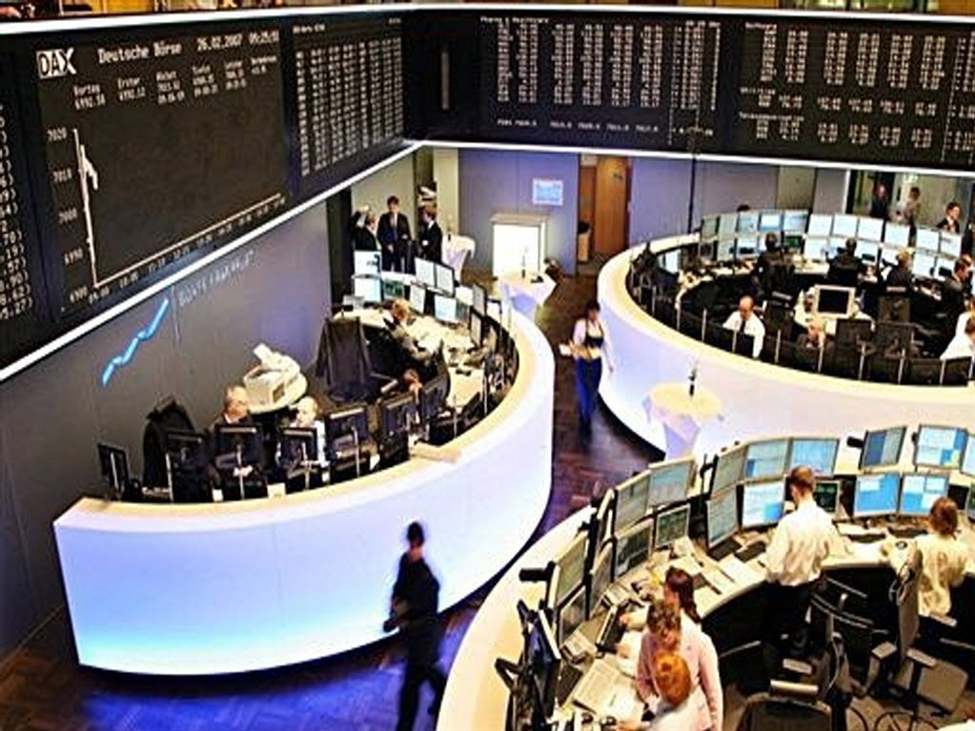
European indices hold lightly changed at the open today
Eurostoxx flatGermany DAX flatFrance CAC 40 flatUK FTSE +0.2%Spain IBEX +0.1%Italy FTSE MIB +0.4%The risk mood is keeping more sidelined so far today, with US futures also looking less enthused. S&P 500 futures are down 0.1% and that’s not helping to give market players much to work with as we get the session underway. In the major currencies space, the dollar is sitting just a little higher – mostly helped by USD/JPY which is up 0.3% to 151.15 but down from the highs earlier of 151.60. This article was written by Justin Low at investinglive.com. 🔗 Read Full Article 💡 DMK Insight The current flat performance across major European indices reflects a broader risk-off sentiment that traders need to be wary of. With US futures showing a slight decline, it suggests that market participants are hesitant to commit capital, likely awaiting clearer signals from economic data or geopolitical developments. This lack of momentum could lead to a consolidation phase, particularly if the S&P 500 fails to reclaim key resistance levels around 4,400. Traders should keep an eye on volume trends; low volume in this environment often precedes larger moves, either up or down. Additionally, the muted reaction in European markets could indicate that investors are pricing in potential headwinds, such as inflation concerns or central bank policies. If the DAX or CAC 40 break below their recent support levels, it might trigger stop-loss orders and exacerbate downward pressure. Conversely, a bounce off these levels could present a buying opportunity for swing traders looking to capitalize on short-term recoveries. Watch for upcoming economic indicators, particularly from the US, as they could serve as catalysts for volatility in both equities and correlated assets like commodities or currencies. In this cautious atmosphere, maintaining a flexible trading strategy is crucial, as the market could shift rapidly based on external news or data releases. 📮 Takeaway Traders should monitor key support levels in European indices and upcoming US economic data for potential volatility triggers in the market.
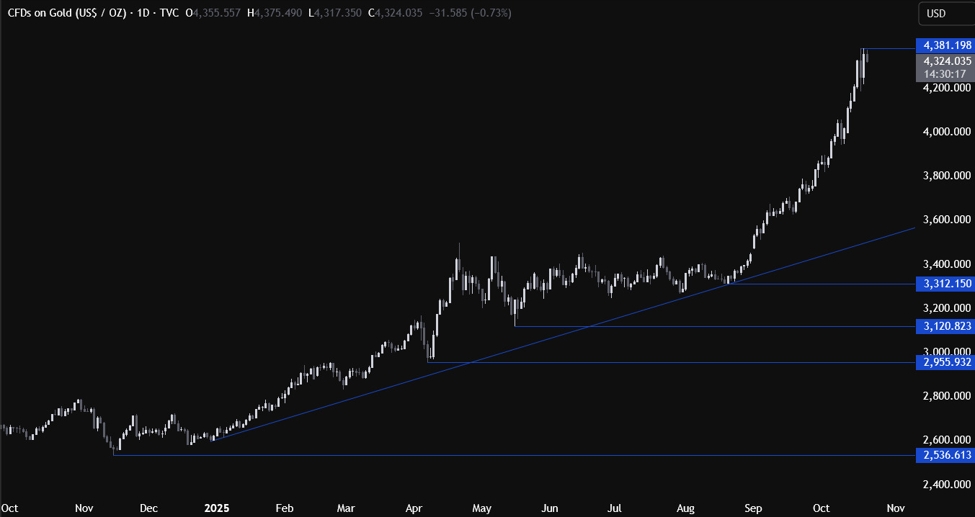
Gold Technical Analysis: Double top or just a pullback?
Fundamental OverviewGold came under some pressure on Friday despite the lack of bearish catalysts. Maybe, the positive risk sentiment triggered some profit-taking but overall, the picture hasn’t changed.The parabolic surge is certainly making some people nervous but given the lack of bearish catalysts, there’s not much to challenge the momentum. The US-China drama remains a key market focus but the market is now more certain on some kind of deal. The main risk event this week could be the US CPI on Friday. Although the Fed is more focused on the labour market now, an upside surprise in inflation could still trigger a hawkish repricing in expectations. In the bigger picture, gold should remain in an uptrend as real yields will likely continue to fall amid the Fed’s dovish reaction function. But in the short term, a hawkish repricing in interest rate expectations could trigger a correction. Gold Technical Analysis – Daily TimeframeOn the daily chart, we can see that gold managed to recover Friday’s losses and extend into yet another all-time high before pulling back a bit. The lack of bearish catalysts continues to keep the bullish momentum intact. This rally went so much parabolic that it’s basically useless to look at the daily timeframe at the moment, so we need to zoom in to see some more details. Gold Technical Analysis – 4 hour TimeframeOn the 4 hour chart, we can see that the price yesterday couldn’t sustain the breakout above the Friday’s high. This might turn out to be a double top in a bigger correction, so we can expect the sellers to step in around the highs to position for a pullback into the major trendline and increase the bearish bets on a break below the 4,185 level. The buyers, on the other hand, will want to see the price breaking higher to invalidate the bearish setup and pile in for a rally into new highs. Gold Technical Analysis – 1 hour TimeframeOn the 1 hour chart, we can see that we have a minor support zone around the 4,280 level where we can also find a minor upward trendline. That’s where we can expect the buyers to step in with a defined risk below the support to position for a rally into new all-time highs. The sellers, on the other hand, will want to see the price breaking lower to increase the bearish bets into the major trendline. The red lines define the average daily range for today. Upcoming CatalystsThe focus remains on the US-China developments but on Friday we will also get the US CPI report and the US flash PMIs. Watch the video below This article was written by Giuseppe Dellamotta at investinglive.com. 🔗 Read Full Article 💡 DMK Insight Gold’s recent pullback, despite no clear bearish signals, highlights a crucial moment for traders. The current positive risk sentiment could be a double-edged sword; while it might encourage profit-taking, it also suggests that many investors are still bullish on gold’s long-term prospects. This is significant because it indicates that the market is still digesting the recent parabolic rise, and traders should be cautious about entering new long positions without a clear catalyst. From a technical standpoint, keep an eye on the $1,950 support level. If gold can hold above this, it may attract more buyers looking for a dip. Conversely, a break below could trigger further selling pressure, potentially leading to a test of the $1,900 mark. Additionally, monitor the RSI for signs of overbought conditions; if it starts to decline, it could signal a shift in momentum. The broader market context also matters—rising interest rates and inflation concerns could weigh on gold prices if risk sentiment shifts. Traders should stay alert to macroeconomic indicators and central bank announcements that could influence market dynamics. In summary, while the bullish trend remains intact, the current environment calls for a careful approach, balancing risk and reward as market sentiment evolves. 📮 Takeaway Watch the $1,950 support level closely; a break could signal further downside, while holding above it may attract new buyers amid evolving market sentiment.

What are the main challenges for Japan's first female prime minister Takaichi?
One can say that the easy part is over for Sanae Takaichi. Even though there has been some turbulence in the past few weeks, she finally got her wish to become Japan’s first ever female prime minister at the third time of asking. Now that she’s in the hot seat, the real challenge begins.So, what are the key things that Takaichi has to address from hereon?Party politics aside, her more immediate challenges will center around preparing for a supplementary budget to counter rising prices and also reducing the number of seats in Japan’s lower house by 10%. The latter is part of the coalition agreement with the Nippon Ishin party. While tough, these are hardly the most difficult of tasks that she has to manage.In the bigger picture, Takaichi also has to deal with what comes next with the trade deal between the US and Japan. And adding to that, she also has to address the slowing and aging economy. Being a fiscal dove, she wants to push the agenda of tax cuts and increased government spending to bolster the economy. But with Japan’s debt levels already being a cause of concern for investors, how is she going to balance all of that out? That not to mention her premiership is coming at a tedious time for the BOJ, who are pushing to raise interest rates.Her victory today marks a historic moment in Japanese politics. However, it might end up being short-lived if she can’t manage to appease the LDP’s new ruling coalition partner and also if she fails to find solutions to the party’s struggles in recent years. Four prime ministers in the last five years is an indictment that Takaichi will be in for a rough ride as prime minister. This article was written by Justin Low at investinglive.com. 🔗 Read Full Article 💡 DMK Insight { “insight”: “Sanae Takaichi’s ascension to Japan’s prime ministership is more than a historical milestone; it signals potential shifts in Japan’s economic policy that traders should closely monitor. With her pro-business stance, we might see a push for deregulation and stimulus measures aimed at revitalizing the economy. This could impact the Japanese yen (JPY) and equities, particularly in sectors like technology and manufacturing that are sensitive to policy changes. Traders should keep an eye on the Nikkei 225 index, which could test resistance levels around 30,000 if Takaichi’s policies gain traction. nnBut here’s the catch: the market’s reaction may not be immediate. Historical patterns suggest that significant policy shifts often take weeks to materialize in market sentiment. Watch for key economic indicators like GDP growth and inflation rates in the coming months, as these will provide insight into how Takaichi’s administration is shaping Japan’s economic landscape. Additionally, monitor the USD/JPY pair; if it breaks above 150, it could signal a bearish trend for the yen, prompting further volatility. nnIn short, while Takaichi’s leadership could boost market confidence, the real impact will depend on her administration’s ability to deliver on economic promises. “,n “takeaway”: “Keep an eye on the Nikkei 225 and USD/JPY for potential volatility as Takaichi’s policies unfold, especially around key economic indicators in the coming months.” } 📮 Takeaway “: “Keep an eye on the Nikkei 225 and USD/JPY for potential volatility as Takaichi’s policies unfold, especially around key economic indicators in the coming months.”