
 Bitcoin
  Ethereum
  Tether
  BNB
BNB  XRP
XRP  USDC
USDC  Solana
  TRON
TRON  Lido Staked Ether
  Figure Heloc
Monday starts quietly, with only remarks from some FOMC members on the agenda. On Tuesday, focus will be on flash manufacturing and services PMIs from Australia, the eurozone, the U.K., and the U.S.In addition, Fed Chair Powell is scheduled to deliver remarks on the economic outlook at the Greater Providence Chamber of Commerce Economic Outlook Luncheon in Rhode Island. Audience questions are expected, though no major policy signals are anticipated. On Wednesday, attention will shift to Australia’s inflation data, while Japan will release the BoJ core CPI y/y. Thursday brings the SNB monetary policy announcement, along with a heavy U.S. calendar including final GDP q/q, weekly jobless claims, durable goods orders m/m, and existing home sales. On Friday, Japan will publish Tokyo core CPI y/y, Canada will release GDP m/m, and the U.S. will report the core PCE price index m/m, personal income m/m, personal spending m/m, along with the revised University of Michigan consumer sentiment and inflation expectations. Throughout the week, numerous FOMC members are scheduled to deliver remarks on the risks to the economy and the Fed’s plan to deliver two more 25bps rate cuts this year. Traders will be closely watching this week’s eurozone PMI data to gauge whether the economy is truly benefiting from the summer burst of optimism or slipping back into sluggish growth. August’s PMI readings were strong, particularly in manufacturing, but ING analysts caution that this may not tell the full story. The European Commission’s own survey pointed to a more temporary rebound, with underlying expectations for the sector still subdued. In Australia, the consensus for CPI y/y is 2.9% vs prior 2.8%. July inflation surprised to the upside at 2.8%, above the 2.7% market forecast. In the month, prices rose 0.9%, driven mainly by electricity, new dwellings, and holiday travel. Electricity costs increased due to timing quirks in rebates and annual price reviews. While this spike should unwind in August as rebates take effect in NSW and ACT, broader energy costs remain a source of uncertainty. Housing inflation also picked up, with new dwelling prices up 0.4% as builders reduced discounts. Westpac expects a return to the 0.2% monthly trend in August, though margin rebuilding could keep upward pressure intact. Recreation prices also surprised to the upside, led by a sharp rise in domestic holiday travel, but this is likely to partially reverse in August as seasonal effects weigh. Westpac projects August CPI to rise just 0.1% m/m, though base effects will likely lift the annual pace to 3.1%. Risks tilt to the upside, particularly if homebuilders continue restoring margins and firming prices. At this week’s meeting, the SNB is widely expected to keep monetary policy unchanged. Recent inflation data in Switzerland came broadly in line with expectations. While monthly inflation dipped –0.1%, similar pullbacks in recent months have not raised significant concerns with Chairman Martin Schlegel saying that the bar is high for a return to negative rates, though not excluding the possibility. In the U.S., the consensus for new home sales is 651K vs prior 652K, and for existing home sales 3.96M vs prior 4.01M. The housing market remains sluggish, with sales activity hovering near historic lows amid high borrowing costs and a cooling labor market that weighs on demand. Existing home sales rose 2% in July but remain barely above year-ago levels, while new home sales slipped 0.6% on the month and are running more than 8% below last year. Builders’ use of incentives such as discounts and mortgage rate buy-downs is proving less effective in attracting buyers. Mortgage rates have eased to 6.26%, an 11-month low, but this is unlikely to trigger a quick rebound. Elevated borrowing costs continue to pressure existing sales, while new home contracts in August faced average rates around 6.6% alongside growing unemployment concerns. Forecasts point to another modest decline ahead, with new home sales expected to dip 0.6% to a 648K annual pace and existing sales seen down 1.5% to 3.95M, according to Wells Fargo analysts. In the U.S., the consensus for core durable goods orders m/m is –0.2% vs prior 1.0%, and for durable goods orders –0.4% vs prior –2.8%. This indicates that the manufacturing sector remains under pressure.While durable goods orders and overall production have improved this year, growth is concentrated in a few industries rather than broad-based. Business sentiment is still weak, with many firms reluctant to commit to new capital projects amid policy uncertainty. The clearest strength continues to come from high-tech areas such as software and computers, where investment has proven more resilient. Wells Fargo takes a more optimistic view. They expect overall new orders for durables to rise 0.6% in August, with much of the gain driven by transportation. Boeing’s order flow points to a rebound in nondefense aircraft, while auto orders may have ticked higher as well. Excluding transportation, however, they also expect new orders to slip by 0.2%. Shipments data will also be in focus as a key gauge of Q3 business investment. After a July jump boosted by aircraft some giveback is likely in August. Still, core nondefense capital goods shipments are expected to hold steady, signaling a reasonable pace of equipment investment this quarter. In Japan, the consensus for Tokyo core CPI y/y is 2.8% vs prior 2.5%. Governor Ueda emphasized that the data will be closely monitored to gauge the impact of U.S. tariffs, though so far he believes Japan’s economy is absorbing the pressures. Rising food prices have been a key driver for inflation but are expected to ease over time. While core inflation remains below 2%, it is gradually edging higher, and the BoJ is watching household inflation expectations closely. Ueda downplayed the recent dip in short-term expectations, but acknowledged that elevated prices can weigh on households, underscoring the need for caution. Overall, the latest figures remain broadly consistent with the BoJ’s outlook. One of this week’s key data releases will be the core PCE deflator, the Fed’s preferred inflation gauge. The consensus for the core PCE price index
SNB total sight deposits w.e. 19 September CHF 472.3 bn vs CHF 468.5 bn prior
Domestic sight deposits CHF 445.1 bn vs CHF 441.7 bn priorThe slight rise in sight deposits in the past week fits with what we’ve seen in the weeks before, that especially after the June monetary policy decision. I dived into more detail in explaining that here. As for the trend since then, you can see the table below: This article was written by Justin Low at investinglive.com. Source: investinglive.com (Read Full Article)

Your Bourse and B2BROKER Partner to Deliver Complete Brokerage Solutions
Your Bourse, a trading technology provider, has entered into a strategic partnership with B2BROKER, a global fintech solutions provider for financial institutions. The collaboration is a part of the growing industry trend towards consolidation, as brokers increasingly seek integrated ecosystems that simplify operations and reduce costs.Launching and scaling a brokerage has traditionally meant working with a patchwork of different providers for trading infrastructure, liquidity, and risk management. This approach often leads to higher costs and complexities. Through combining their strengths, Your Bourse and B2BROKER strive to change that, offering brokers a complete package that simplifies setup and supports long-term growth.As a part of collaboration, B2BROKER clients gain access to Your Bourse’s low-latency trading infrastructure: Liquidity Aggregator, Matching Engine, Risk Management, as well as connectors to the most popular trading platforms (MT4, MT5, cTrader, DXTrader, TradeLocker, and others), alongside B2BROKER’s comprehensive turnkey offering. The latter includes trading platforms, liquidity, CRM systems, and other essential components for running a brokerage.The partnership significantly shortens time-to-market, enabling brokers to launch in weeks instead of months, while providing scalability to expand into new asset classes and handle higher trading volumes without overhauling systems.“This partnership empowers brokers of all sizes to start and expand their businesses faster and with fewer operational challenges,” said Elina Pedersen, Co-Founder and CEO of Your Bourse. “By integrating our technology with B2BROKER’s package solutions, clients receive reliable infrastructure and a clear path to market.”John Murillo, Chief Business Officer at B2BROKER, added: “Working with Your Bourse strengthens the value we deliver to brokers. Together, we provide everything a brokerage needs, from liquidity and risk management to ready-to-use trading platforms, all in one package.”The integration is available immediately. Brokers interested in learning more can visit Your Bourse or B2BROKER websites.About B2BROKERB2BROKER (https://b2broker.com) is a global fintech solutions provider for financial institutions. It delivers liquidity, trading technology, payment solutions, and brokerage infrastructure through a network of specialised entities. Founded in 2014, with key hubs in London, Limassol, Hong Kong, and Dubai, the company operates in 11 countries, serving clients across Europe, the Middle East, and Asia. B2BROKER serves brokers, exchanges, hedge funds, proprietary trading firms, and other financial institutions. Leveraging its extensive network and ecosystem-driven approach, the company provides scalable solutions that help clients streamline operations, maximise efficiency, and drive growth.About Your BourseYour Bourse is a trading technology provider powering modern brokerages — everything traders need to connect to liquidity, run execution, manage risk, and stay profitable — all in one platform. Your Bourse offers 3 core products: Trade Server, Trade Engine, and Risk Management. All products are built for performance and reliability: ultra-low latency execution, collocation in all major Equinix data centers, 99.999% uptime SLA, FIX API and Web API for seamless integration, real-time monitoring, and reporting tools. This article was written by IL Contributors at investinglive.com. Source: investinglive.com (Read Full Article)

Everyone's waiting to buy the pullback in stocks. But when does it come?
Over the weekend, I saw many posts on X talking about the current US stock market rally and how it looks like a bubble. The problem with bubbles is that you never really know if it’s indeed a bubble, and even if you know, shorting a bubble is usually a financial suicide. Most of the people calling it a bubble are also those who missed the entire rally, so it makes them psychologically feel better calling it a bubble. This rally though has been supported by clear macro drivers. First and foremost, the main driver of the stock market is growth expectations. If you have positive growth expectations, you can also expect higher earnings in the future which is what a stock price reflects. Those growth expectations got hit badly in April when Trump announced very aggressive tariffs. That’s when the market started to price in lower growth and even potentially a recession. When Trump reversed course by pausing the aggressive tariffs and bringing the rates down to 10% for everyone, those negative growth expectations started to be repriced on the positive side. And that trend kept on going for months as we got further de-escalation, trade deals and so on. Recall that despite a negative US GDP report, the market continued on rallying steadily. This is because the market is forward-looking. It was pricing the expected better growth in the next two quarters. The GDP report reflected what the market already priced in in April. Investors who rely on backward-looking data indeed had a hard time. You can say that H1 2025 was all about tariffs.The second half of 2025 is being driven by the Fed. In fact, if you look at the price chart for the S&P 500 or Nasdaq, you’ll notice that we’ve been mostly in a range for July and August. That’s when we got a slightly hawkish FOMC decision in July coupled with weak labour market data in August. The positive momentum in growth expectations was starting to wane…But the Fed came to the rescue. Policymakers started to deliver dovish comments and opening the door for imminent rate cuts, which eventually culminated with Powell’s dovish tilt at the Jackson Hole Symposium. The stock market was again bullish on growth momentum holding because of rate cuts. Druckenmiller once said “Earnings don’t move the overall market; it’s the Federal Reserve Board. Focus on the central banks, and focus on the movement of liquidity. Most people in the market are looking for earnings and conventional measures. It’s liquidity that moves markets”. The Federal Reserve can single handedly push the economy into a recession or bring it out of it. It’s a very powerful force in the markets and right now it’s supporting the economy and the markets. Don’t fight the Fed. Problems arise when the economy gets too hot and that’s when the Fed support wanes and the central bank starts to work against the market. And this is where we could get the pullbacks (and eventually even a crash)…Right now, the market is pricing 112 bps of easing by the end of 2026 compared to just 75 bps projected by the Fed. This means that the market is too optimistic. Therefore, a hawkish repricing in those expectations should in theory provide a pullback in all asset classes. So, if you are waiting for a pullback, then wait for US data. If we get strong US data (especially with the NFP next week), then we could finally get a decent pullback. But don’t make this mistake…It will highly likely be just a pullback. In this environment, one can just buy or wait, but definitely not sell (unless one does it for a quick trade supported by a catalyst). Once the market pricing gets back in line with the Fed’s projections, then the stock market should restart its rally. In fact, as long as the Fed’s reaction function remains dovish, the downside will remain limited. This “melt-up” phase will likely go on as long as the Fed remains more focused on the labour market. Once inflation starts to become a serious worry, that’s when we will finally get a meaningful correction (or even a bear market if the Fed starts to hike rates). Until then, the pullbacks will just be dip-buying opportunities.Some people brought up another Druckenmiller quote about the dot-com bubble. That’s when Druckenmiller surrendered to his emotions and bought into the bubble even though he knew he shouldn’t have. He bought at the top of the bubble and eventually lost billions. People take this quote as a lesson and a warning for the current rally. But there’s one key difference: back then the Fed restarted hiking interest rates, so the central bank was working against the market. Today, the Fed is doing the opposite. Whether the Fed is contributing in creating a bubble we don’t know and only time will tell. But you don’t want to fight it. In this case, the quote from Soros is more appropriate “When I see a bubble forming, I rush in to buy, adding fuel to the fire. That is not irrational.” This article was written by Giuseppe Dellamotta at investinglive.com. Source: investinglive.com (Read Full Article)

Bitcoin Technical Analysis for Today with tradeCompass (September 22, 2025)
Crypto is red today but tradeCompass is open to both sides, depending on how price is located in relation to the bullish or bearish tresholds.Bullish above: $114,050 Bearish below: $113,485 Current price: $112,810 Primary Bias: Bearish while under $113,485Market Backdrop: Bitcoin and Majors in the Past 24 HoursThe last 24 hours have been broadly negative across crypto markets. Bitcoin slipped ~1.8%, Ethereum dropped ~2.6%, and high-beta names underperformed: Solana fell ~4.9%, Cardano lagged, XRP lost ~3.2%, and DOGE ~3.8%. The relative outlier was BNB, which held almost flat (-0.25%), showing resilience compared to peers.The decline was orderly rather than panicked—no sign of capitulation. Altcoins with higher risk profiles bled harder, a classic risk-off signal. Traders will want to see Bitcoin and Ethereum begin to form higher lows with lighter selling pressure before treating this as anything other than a fade-the-bounce tape.Bitcoin Technical Analysis: Directional BiasAt the time of this analysis, Bitcoin futures trade at $112,810, directly on today’s Point of Control (POC). With the bearish threshold set at $113,485, price is currently in bearish territory.That said, intraday retracements back toward $113,400–$113,600 are possible. Some traders may prefer to short closer to that zone for a cleaner entry, while others might scale in—placing a partial short here and saving the bulk of their position for any retrace closer to the threshold.Bitcoin Analysis for Today: Key Futures Levels and Partial Profit TargetsFor bearish setups (shorts): First partial target: $112,875, just above today’s POC, where market flow often slows. Second target: $112,435, overlapping with liquidity pools from September 7–10. Third target: $111,680, matching the September 9 POC. Final target: $111,050, in line with the September 9 VAL and liquidity from September 4–5.For bullish setups (longs): Activation level: $114,050. First target: $114,330. Second target: $114,745. Third target: $115,560. Final target: $116,000, a potential magnet if buying momentum takes hold.Educational Corner: POC and Why It Matters in Bitcoin FuturesThe Point of Control (POC) highlights the price where the largest trading volume accumulated during the session. It often acts as a market balance line—prices revisit it frequently, and it tends to serve as both support/resistance and a profit-taking magnet. For Bitcoin futures technical analysis, the POC is a vital guidepost because it shows where traders found the most “fair value” during the day.Trade Management Principles for Bitcoin Technical AnalysisOne trade per direction under tradeCompass to avoid overtrading.After reaching TP2, shift the stop to entry (breakeven) to protect gains and manage the runner.Stops belong just beyond the entry-side threshold with a small buffer—never beyond the opposite threshold, as that invalidates the trade setup.Confirmation can be flexible: some traders wait for closes above/below thresholds, others use VWAP retests or intraday higher lows for timing.Professional ReminderThis Bitcoin analysis for today is designed as a decision support framework. It does not guarantee outcomes and is not financial advice. Futures and crypto markets are volatile, and risk management is essential. Always size positions responsibly. Visit investingLive.com (foremerly ForexLive.com) for additional views. This article was written by Itai Levitan at investinglive.com. Source: investinglive.com (Read Full Article)

EURUSD spiked into a new 2025 high but gave back all the gains. Was that just a fakeout?
Fundamental OverviewThe USD weakened across the board on the Fed’s decision but eventually erased all the losses and increased the gains as traders digested all the information and realised the projected rate path was more hawkish than market’s pricing.In fact, the dot plot showed that the FOMC projected two more rate cuts for 2025 by a narrow majority, with the rest of officials expecting just one more or even none. Moreover, the Fed projected just one cut in 2026 compared to three that the market was pricing before the decision.Fed Chair Powell then labelled the rate cut as a “risk management” action given the weakening in the labour market data. But overall, he sounded pretty neutral even though he understandably placed more emphasis on the labour market given the two consecutive soft NFP reports. The day after the FOMC decision, we got solid US jobless claims report, and the greenback increased the gains further. Looking forward, it’s going to be all about the data. Strong data will likely trigger a hawkish repricing in interest rates expectations and support the greenback. On the other hand, weak data will likely continue to weigh on it. On the EUR side, the ECB left interest rates unchanged at the last meeting as widely expected with limited forward guidance other than the usual data-dependent approach. President Lagarde made it pretty clear that the central bank finished cutting rates after she said that growth risks are balanced and the disinflationary process was over. The market sees just 4 bps of easing by year-end and 11 bps in total by the end of 2026. EURUSD Technical Analysis – Daily TimeframeOn the daily chart, we can see that EURUSD probed above the 2025 high but eventually erased all the gains as the US dollar strengthened across the board following the Fed’s decision. The price is bouncing from the upward trendline that is defining the bullish momentum. The buyers will likely continue to lean on the trendline to keep pushing into new highs, while the sellers will look for a break lower to target the 1.16 handle next. EURUSD Technical Analysis – 4 hour TimeframeOn the 4 hour chart, we can see more clearly the recent price action although there’s not much else we can add here. The buyers will look for dip-buying opportunities around the trendline, while the sellers will wait for a breakout to target a drop into the 1.16 support. EURUSD Technical Analysis – 1 hour TimeframeOn the 1 hour chart, we can see that we have a minor resistance zone around the 1.1790 level. If the price gets there, we can expect the sellers to step in with a defined risk above the resistance to position for a drop into the trendline targeting a breakout. The buyers, on the other hand, will look for a break higher to increase the bullish bets into new highs. The red lines define the average daily range for today.Upcoming CatalystsTomorrow we have the Eurozone and the US Flash PMIs, as well as Fed Chair Powell speaking. On Thursday, we get the latest US Jobless Claims figures. On Friday, we conclude the week with the US PCE report. Keep also an eye on Fed speakers this week. This article was written by Giuseppe Dellamotta at investinglive.com. Source: investinglive.com (Read Full Article)
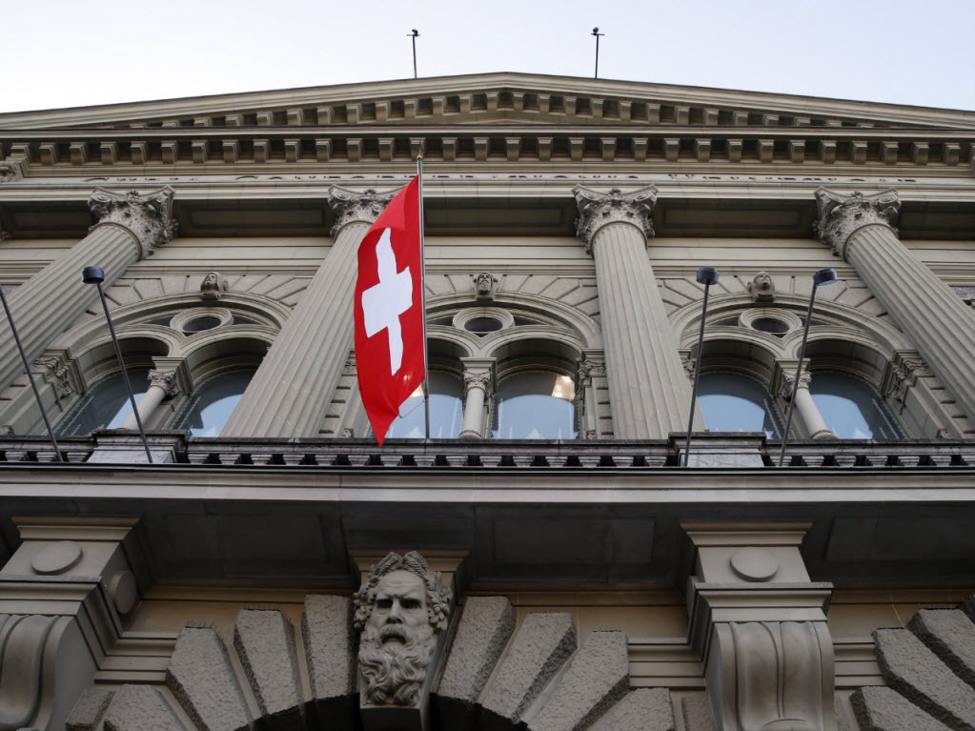
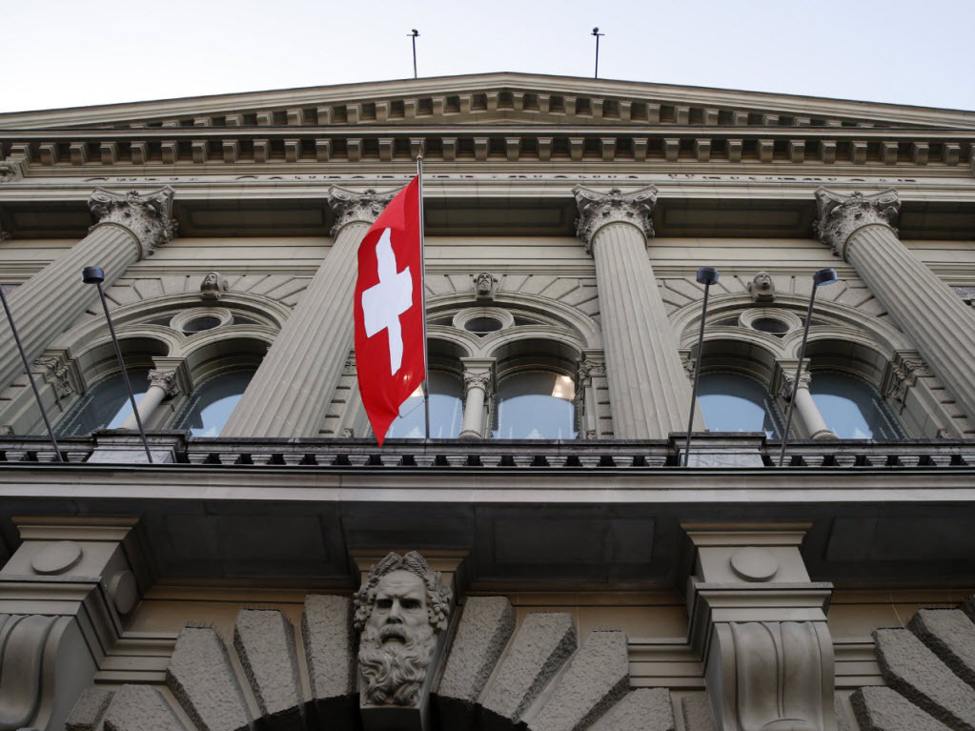
SNB set to steer clear of negative rates, at least for now
After six consecutive rate cuts from March last year to June this year, the SNB is set to keep its key policy rate unchanged in their September decision this week. The move back in June saw them bring down rates to 0%, so we’re back in zero-interest rate policy (ZIRP). The threshold in moving from higher rates to here is one thing but as policymakers have made clear, the threshold from moving from here to negative interest rate policy (NIRP) is a much higher one.Similar to what we’re seeing in Japan, the Covid pandemic gave the SNB an out to move away from NIRP. They embraced that but in the end, it looks like they’ve failed to dig themselves out of the hole. It feels like it is only a matter of time before negative rates return but this week won’t be that.Markets are not pricing in any more rate cuts for the SNB for the year and even looking to next year, the pricing is relatively tentative. There’s no strong conviction for a further rate cut.That being said, the equation and the SNB’s fate very much relies on the Swiss franc from hereon. So, things can change quickly if and when it does.The thing about aggressive easing and dealing with low inflation, the SNB has to balance out the strength of the currency as well as its policy mandate. USD/CHF is down over 12% this year, largely owing to the dollar’s own plight. However, EUR/CHF hasn’t really budged and is still holding near 0.9300 for the better part of 2025. We’re just a hop, skip, and a crisis away from breaking to fresh record lows for the pair.As such, the SNB may be cornered into pursuing negative rates so long as the the franc continues to be one of the top performers in the major currencies space.That especially as domestic inflation pressures continue to underwhelm. The latest report in August here shows core annual inflation slipping to 0.7%. It’s still not quite at alarming levels to prompt immediate action by the SNB but we’re not that far away.If inflation developments play out softer than what the central bank is forecasting, it’s only a matter of time before we start seeing the SNB change their view on negative rates.That’s the key risk when viewing the SNB outlook at the moment and shows where the balance of risks are skewed towards.As much as the Swiss central bank maintains that there is a high bar before reaching negative rates, the path of least resistance is still favouring easier and looser monetary policy moving forward rather than a tighter one.And the paradox here is that it could be one triggered and fueled by a stronger currency. I definitely do not envy being in the SNB’s position. This article was written by Justin Low at investinglive.com. Source: investinglive.com (Read Full Article)

ECB's Escriva: Exchange rate level not a concern, inflation projections on target
Inflation should not fall anymoreWe are in a situation in which, despite all the uncertainty and the need to remain vigilant about its impact on prices, our projections are at 2% and rates are at 2%.Escriva is not saying anything new here. He already spoke last week and made it pretty clear that they are now in a hard pause mode. He’s one of those open for interest rates to move in either direction but small deviations from their 2% inflation target won’t call for adjustments. This article was written by Giuseppe Dellamotta at investinglive.com. Source: investinglive.com (Read Full Article)

ECB's Makhlouf: Aging populations threaten Euro Area job growth
Migration can mitigate some of the effects of the coming demographic changes, but it cannot push back the tideDemographic shifts would have varying and sometimes contradictory effects on inflationLikely result would be segmented inflation dynamicsMakhlouf is speaking about the challenges central bankers could face with demographic shifts and therefore with their price stability mandate.”Older population could damp aggregate demand and limit price growth but fewer working-age people risk tightening labour markets and push up wages.” This article was written by Giuseppe Dellamotta at investinglive.com. Source: investinglive.com (Read Full Article)

Heads up: Fedspeak to flood the economic calendar in the days ahead
Let’s dive straight into the agenda and see what are the details surrounding their scheduled appearances.Monday- Williams (A discussion on “High-level policy panel” in an online meet hosted by the BIS, ECB)- Musalem (An hour-long speech on “The outlook for the US economy and monetary policy” at The Brookings Institution)- Miran* (Speech on economic outlook and monetary policy approach at The Economic Club of New York)- Barkin (An hour-long speech on the economy, outlook, policy, with Q&A session conducted online by the Howard County Chamber)- Hammack (A 45-minute speech on the critical functions of Reserve Banks and the state of the economy as part of a Fed Talk event)Tuesday- Bowman (A virtual speech on the economic outlook at the 134th Annual Kentucky Bankers Association Convention)- Bostic (A live recording episode of the Macro Musings podcast, in discussing the economic outlook)- Powell* (A speech on the economic outlook as part of the Greater Providence Chamber of Commerce 2025 Economic Outlook Luncheon)Wednesday- Daly (A speech on the economic outlook at the annual Spencer Fox Eccles Convocation)Thursday- Goolsbee (A two-hour speech/discussion on the economy, interest rates, employment trends and inflation as part of the Crain’s Grand Rapids Events)- Schmid (A speech on monetary policy and economic outlook in an event hosted by the Mid-Sized Bank Coalition of America)- Williams (A 10-minute welcome remark for the Fourth Annual International Roles of the US Dollar Conference)- Bowman (A 30-minute discussion as part of the Financial Markets Quality Conference 2025)- Barr (A one-hour speech on bank stress testing and potential future reform options at the Peterson Institute for International Economics)- Logan (An hour-long panel discussion as part of the Fed’s Balance Sheet Conference)- Daly (A speech on the economic outlook at the San Francisco Fed’s 2025 Western Bankers Forum)Friday- Barkin (A 45-minute speech on the economic outlook at the Peterson Institute for International Economics)- Bowman (A luncheon speech on “The Monetary Policy Making Process” at the Forecasters Club of New York) This article was written by Justin Low at investinglive.com. Source: investinglive.com (Read Full Article)