
 Bitcoin
  Ethereum
  Tether
  BNB
BNB  XRP
XRP  USDC
USDC  Solana
  TRON
TRON  Lido Staked Ether
  Figure Heloc
Good morning, afternoon or evening to all ForexLive traders and welcome to the start of the new FX week. Indicative rates are not too much changed from late Friday levelsEUR/USD 1.1746USD/JPY 147.93GBP/USD 1.3479USD/CHF 0.7955USD/CAD 1.3780AUD/USD 0.6597NZD/USD 0.5867 This article was written by Eamonn Sheridan at investinglive.com. Source: investinglive.com (Read Full Article)
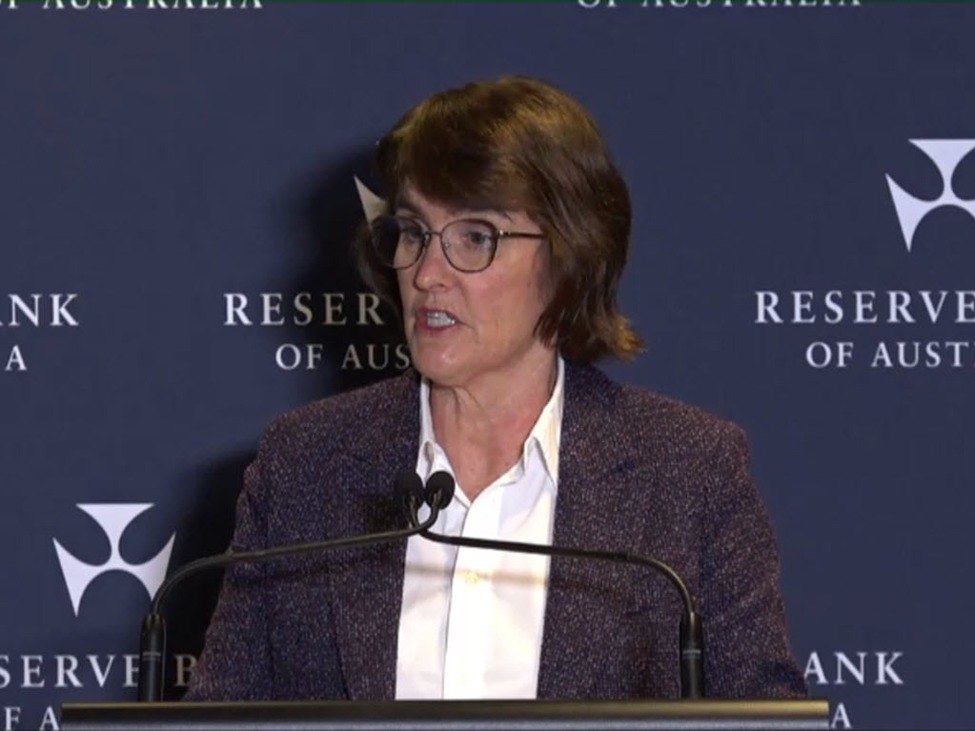
Economic calendar in Asia 22 September 2025 – Reserve Bank of Australia Governor Bullock
Reserve Bank of Australia Governor Bullock is appearing in parliament today, giving a prepared speech and then taking questions from the elected bozos. The RBA is expected to continue cutting its cash rate but at a slow pace. There is a meeting at the end of this month where no cut is expected. Also on the calendar is the People’s Bank of China interest rate decision. This is the Loan Prime Rate (LPR) setting. Expectations fare current rates will remain unchanged:one-year 3.0%five-year 3.5% The main policy rate used by the People’s Bank of China now is its daily Open Market Operations repo, currently at 1.4%. I post this each day at the USD/CNY reference rate setting. This article was written by Eamonn Sheridan at investinglive.com. Source: investinglive.com (Read Full Article)

ECB’s Kazaks: No rush for more interest rate cuts, inflation near 2% acceptable
European Central Bank (ECB) Governing Council member Martins Kazaks said inflation hovering slightly below 2% is acceptable, stressing that the central bank should avoid knee-jerk policy moves. The Latvian central bank chief argued it would be unrealistic to expect inflation to always land exactly at target, and rates should only shift if there’s a clear need.Kazaks said the ECB has already achieved its goal with inflation near 2%, so there’s no reason to rush into more cuts after the eight already delivered. While October is unlikely for a move, he noted December could bring more clarity as fresh economic projections arrive. He added that, if warranted, a small rate cut could be used to reinforce the ECB’s baseline scenario, similar to the final hike in 2023.He also flagged risks such as a stronger euro, cheaper imports from China, and the new emissions trading system, which could all sway inflation. Overall, he expects price growth to fluctuate around 2% and says minor deviations should not prompt policy shifts.-Kazaks was speaking at a European finance chiefs meeting in Copenhagen. From the same event over the weekend:ECB Stournaras signals rate cuts over, more easing needs major shift in inflation outlook-ECB patience limits downside pressure on the euro from further rate cuts; but is appears the door is open for a small December cut. The signaling of rate stability should, at the margin, trim near-term policy volatility for European stocks. This article was written by Eamonn Sheridan at investinglive.com. Source: investinglive.com (Read Full Article)

South Korea’s Lee warns US $350bn demand could spark 1997-style financial crisis
South Korean President Lee Jae Myung warned that Seoul could face a financial crisis similar to the 1997 meltdown if it accepts U.S. demands for $350 billion in investments without safeguards. He said the key stumbling block in trade talks is ensuring the commercial viability of projects, with Washington insisting on control over where the money goes.Lee said South Korea has proposed a foreign exchange swap with the U.S. to limit risks but noted that, unlike Japan, Seoul lacks large reserves or a swap line. While he sees no major disagreements with the U.S. on defence and security, he cautioned that unresolved trade issues could destabilise ties.On other fronts, Lee played down concerns over a U.S. immigration raid on a Hyundai plant, saying it was likely driven by overzealous officials rather than directed by President Trump. He also warned of rising threats from Russia–North Korea military cooperation, while acknowledging that dialogue with Pyongyang will be difficult for now. Lee stressed that peace around the Taiwan Strait and finding an “exit ramp” from global tensions remain urgent priorities. Reuters with the info- This article was written by Eamonn Sheridan at investinglive.com. Source: investinglive.com (Read Full Article)

ECB’s Scicluna flags trade, euro risks but sees policy well placed
European Central Bank (ECB) Governing Council member Edward Scicluna said current interest rates are appropriate and there is no immediate need for change. He noted that while trade tensions and the euro’s exchange rate remain risks, the region’s resilience and expected fiscal spending support leaving policy as is.Scicluna argued that inflation is unlikely to sit exactly at 2% and projections for 2027 at 1.9% aren’t concerning. He described rates as neutral, adding that policymakers will act only if conditions shift materially.-Scicluna’s remarks are from in an interview in Copenhagen, where some of his colleagues at the ECB expressed similar views on their outlook for rates:ECB Stournaras signals rate cuts over, more easing needs major shift in inflation outlookECB’s Kazaks: No rush for more interest rate cuts, inflation near 2% acceptableIn summary. Stournaras (Greece)Stance: Rates steady, policy “at a good equilibrium.”Key points: Inflation slightly below 2% not enough for more cuts; no reason to act on rates now.Next move: No urgency; would only shift on a major shock.Kazaks (Latvia)Stance: Rates appropriate, inflation near 2% acceptable.Key points: Minor deviations around target can be ignored; October cut unlikely; December could be reconsidered with new data.Next move: Small cut possible in December if projections warrantScicluna:Stance: Rates “fine where they are,” neutral.Key points: Inflation at 1.9% in 2027 not concerning; watching trade tensions and euro FX, but fiscal spending and resilience support steady policy.Next move: No urgency; only act if conditions materially change. This article was written by Eamonn Sheridan at investinglive.com. Source: investinglive.com (Read Full Article)
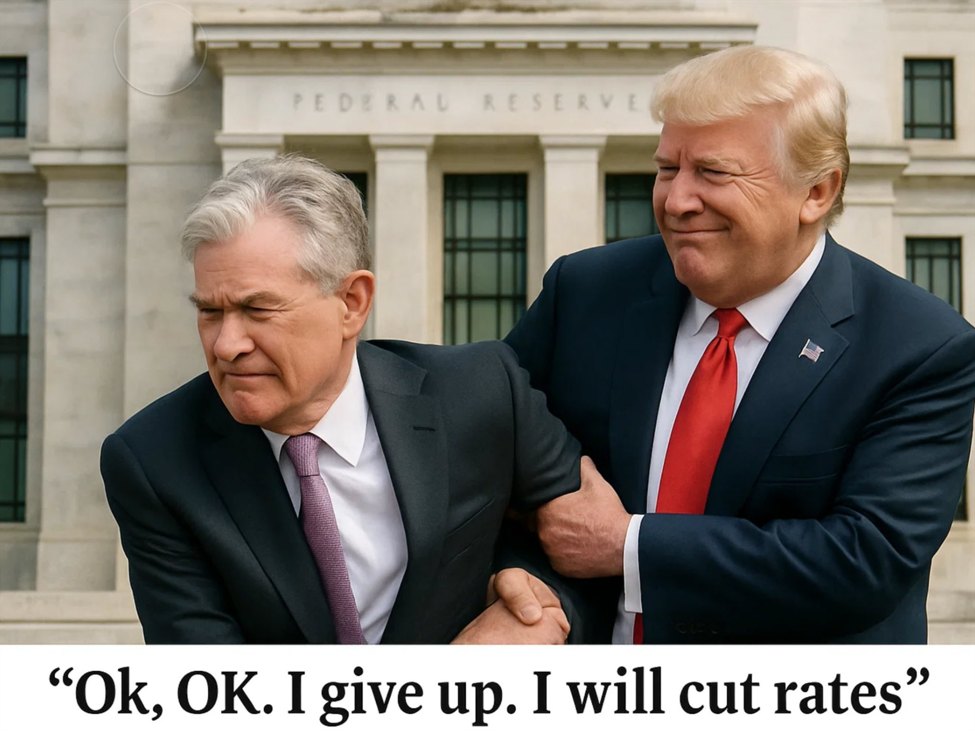
Key US inflation data that was due this week has been "postponed "
Axios carried the report that the US Bureau of Labor Statistics postponed the release of a key annual report central to future inflation data.the annual release of consumer expenditures data was set for Tuesdayit’ll now be “rescheduled to a later date”We will update users when more information is available,” the notice said.This report has data that is used to determine the weighting of specific goods and services in the Consumer Price Index for the year ahead.Here is the link for more.–This is probably fair enough, you can’t expect governments to manipulate the data to suit themselves if they don’t have enough time. This article was written by Eamonn Sheridan at investinglive.com. Source: investinglive.com (Read Full Article)

Saks Global is considering selling 49% of Bergdorf Goodman for about $1 billion
The Wall Street Journal (gated) with the report. In brief:Saks Global is considering selling 49% of Bergdorf Goodman for about $1 billion to unlock value and reduce debt.Potential buyers for the stake in Bergdorf Goodman include Middle Eastern sovereign-wealth funds and strategic investors.Bergdorf Goodman, known for luxury goods and superior service, might be valued between $1.5 billion and $2.5 billion. This article was written by Eamonn Sheridan at investinglive.com. Source: investinglive.com (Read Full Article)

Euro may hit $1.24 in 2026 as ECB holds steady, Fed cuts weaken dollar.
RBC Capital Markets strategists expect the euro to strengthen to $1.24 in the fourth quarter of 2026 from its current $1.1759. They argue the European Central Bank is likely to keep rates unchanged for an extended period, which should support the single currency.Markets are still pricing in some risk of an additional ECB cut, but RBC sees that fading as the eurozone growth outlook remains resilient. By contrast, the Federal Reserve has resumed rate reductions and signaled more to come, making it cheaper for global investors to hedge against dollar weakness. At the same time, capital flows are shifting away from U.S. assets toward Europe.-RBC’s euro outlook highlights concern that prolonged currency strength could ease inflation pressures, limiting the need for further ECB cuts. While this policy stability supports capital inflows into European assets, a stronger euro may also weigh on exporters, leaving equities facing a mixed impact. This article was written by Eamonn Sheridan at investinglive.com. Source: investinglive.com (Read Full Article)
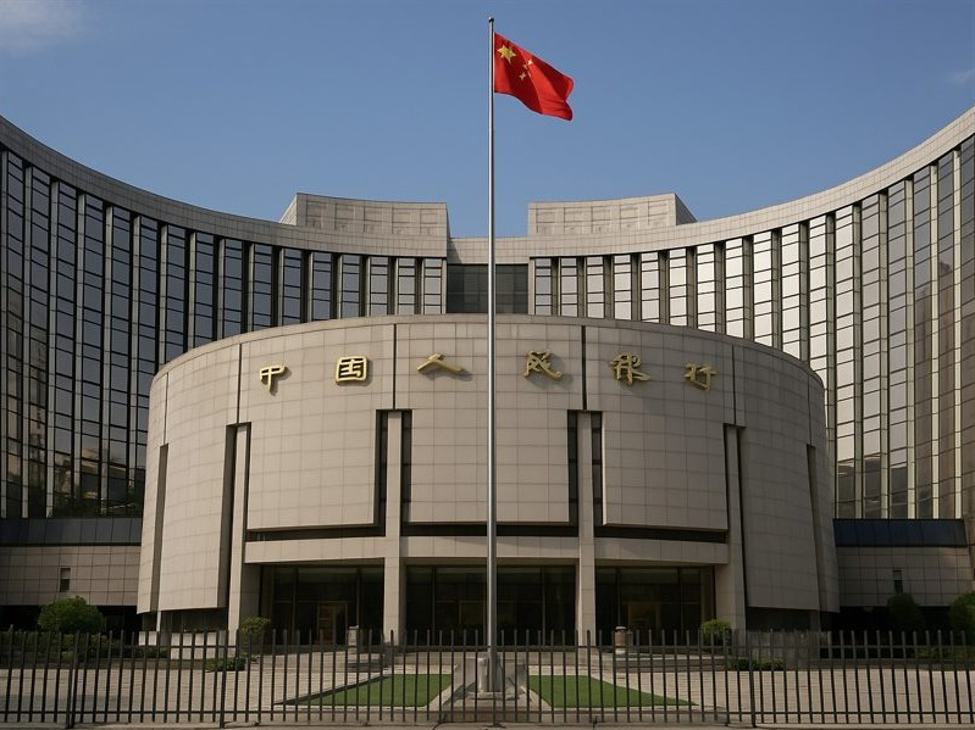
China seen holding lending rates steady today despite Fed cut. Unchanged 4 straight months
China is expected to keep its benchmark lending rates unchanged on Monday, marking a fourth straight month of stability despite the Federal Reserve’s move to cut rates last week. A Reuters survey of 20 analysts unanimously predicted no change, leaving the one-year loan prime rate (LPR) at 3.00% and the five-year at 3.50%.While recent data points to slowing momentum in the Chinese economy, policymakers appear reluctant to roll out large-scale stimulus, with resilient exports and a rally in domestic equities reducing pressure for action. The People’s Bank of China last week left its seven-day reverse repo rate—the main policy rate—unchanged, reinforcing expectations that the LPR will remain steady.Most lending in China is tied to the one-year LPR, while the five-year rate guides mortgage pricing. Both rates were last trimmed by 10 basis points in May. —PBOC LPR Moves (2024–2025)— This article was written by Eamonn Sheridan at investinglive.com. Source: investinglive.com (Read Full Article)

UBS forecasts S&P 500 as high as 7,500 into mid-2026.
UBS said U.S. equities should remain supported as the Federal Reserve’s easing cycle unfolds without recession, with further gains underpinned by advances in artificial intelligence, solid earnings and resilient consumption.The bank pointed to AI as a structural driver, noting that company-specific developments have already lifted names such as Intel, Broadcom and Oracle. UBS forecasts global AI capital expenditure to climb 67% to USD 375 billion in 2025 and another 33% to USD 500 billion in 2026, with strong demand for computing capacity and improving monetization trends reinforcing the outlook.Earnings momentum also remains robust, with S&P 500 corporate profits rising 8% in the second quarter versus the bank’s earlier forecast of 5%. Nearly four out of five firms beat sales estimates, while the median EPS beat was stronger than average at 4.3%. UBS expects S&P 500 EPS to reach USD 270 this year, up 8%, and USD 290 in 2026, up 7.5%.On the macro side, consumer spending continues to cushion the economy, with retail sales rising for three straight months and August data topping expectations. While the labor market is showing some weakness, household and corporate balance sheets remain healthy, UBS said. Deregulation efforts from Washington could also add support to growth.Still, the bank cautioned that valuations are high relative to long-term averages, making a period of consolidation likely after the recent strong run. UBS’s base case sees the S&P 500 reaching 6,800 by June 2026, while a bull-case scenario could take the index to 7,500. It advised investors to add exposure on market dips, with a focus on IT, financials, health care, communication services and utilities. This article was written by Eamonn Sheridan at investinglive.com. Source: investinglive.com (Read Full Article)